
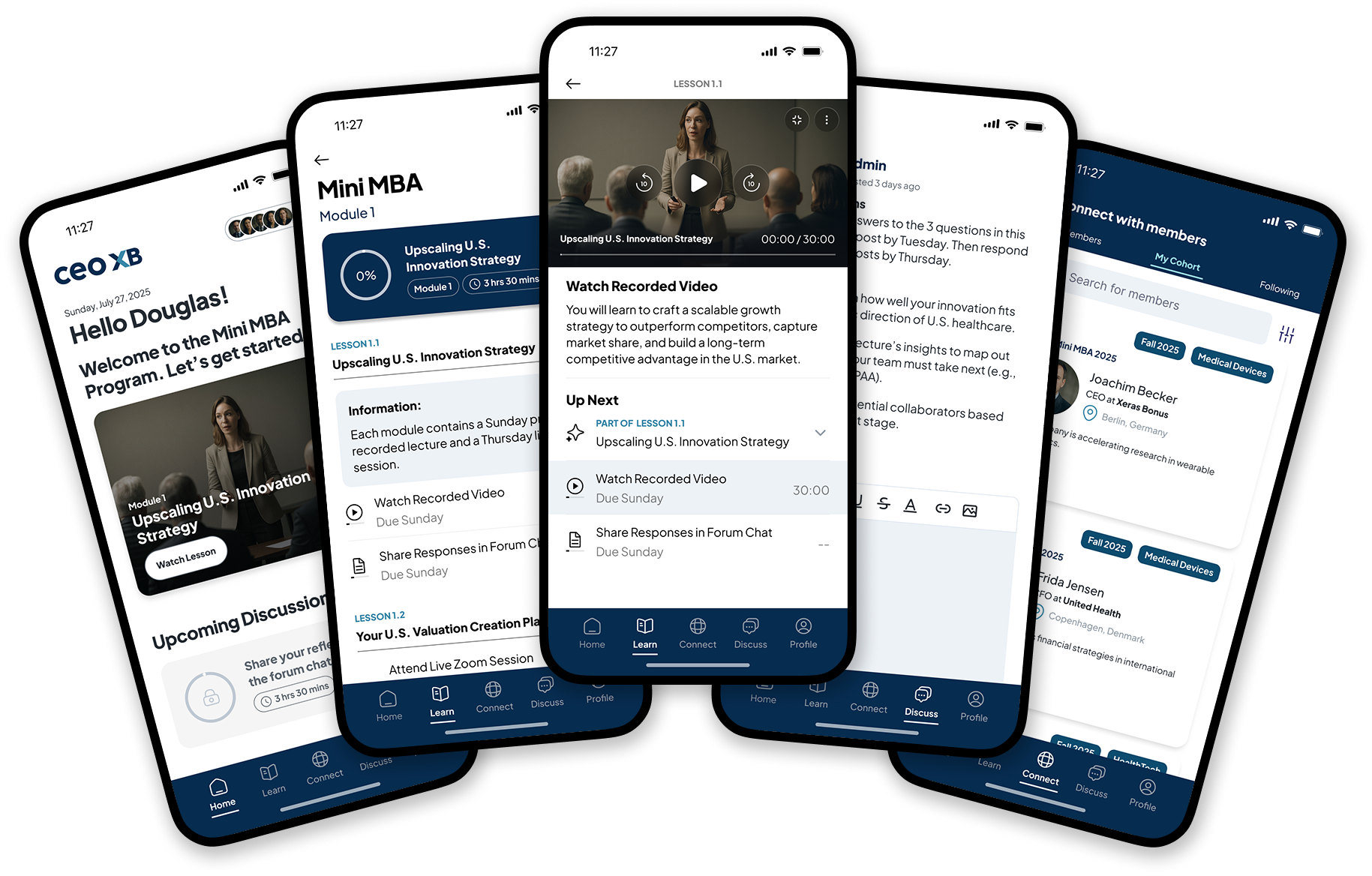
As a learning platform, CEO XB delivers learning modules to primarily CEOs in the health industry based in Europe, focusing on business expansion and networking.
This platform was built from 0 to 1, starting by understanding our client's needs and framing them into a solvable design problem.
As part of my Master's Capstone, I worked with clients from the Global Scale Up Program, an accelerator program focused on helping early stage, European Startups expand into the United States.
Our clients had a vision of a mobile platform that bridged CEOs together and brought tailored education programs. Throughout my team's four months of work, we brought this vision into reality in the form of CEO XB.

Every year, our clients bring over EU CEOs to the States to mentor them on expansion, business strategy, and networking. During these events, CEOs build strong friendships and comraderies. However, these relationships fizzle out soon after CEOs return to their home countries. This conflict was used as a starting point to build our foundational research.
We conducted both literature review of CEO and startup culture, as well as competitive analyses of healthtech accelerator programs.


In addition, our team investigated five other accelerator and mentorship programs. The main purpose was to understand the different types of values and business deliverables that these competitors were offering to CEOs currently. From that, our team can draw aspects of these competitors into the CEO XB platform.





From our competitive analysis, features that were deemed desirable included User Profiles, Tailored Mentorship, Event Filtering, and Networking Opportunities.
To layer additional context to our findings, we held hour-long conversations with three European CEOs.



From all of our combined secondary research and interviews, we landed on two key areas to focus on when building CEO XB: Knowledge Gaps and Connections.

Knowledge Gaps emphasize the need for CEOs to constantly be learning in order to not fall behind the pack. Ensuring that CEO XB delivers effective and digestible learning modules is essential to the product's value proposition.
Connections then emphasize the importance for CEOs to build long-lasting, serendipitous bridges with not only their peers in the industry, but important business connections such as venture capital investment firms. CEO XB will focus on making sure that CEOs have ample opportunity to network and get to know their networking landscape.
Initially, our team thought that we were only creating a simple networking and matchmaking platform. As conversations with both CEOs and our clients continued, it became clearer that the scope was increasing, and quickly at that. From mentorship, to matchmaking, to an educational platform, our clients had a long list of features they wanted to include. Our team decided that a feature prioritization workshop would be the best course of action, to contain the ever growing list of features, all while ensuring that clients stayed involved and aligned.
%20-%20Agile%202x2%20matrix%201.png)
With key features prioritized, we worked as a team to sketch different screens and flows for CEO XB. Through strategies such as Crazy 8's and storyboarding, we created quick but effective sketches that effectively communicated our visions to each other and clients.
Using our sketches as a base, we progressed our designs into the lo-fi stage, focusing on layout and usability before deciding on a design system.
Our team conducted a Lightning Demo workshop, where we all presented interesting designs from our own individual research, in order to generate inspirations for our design direction.
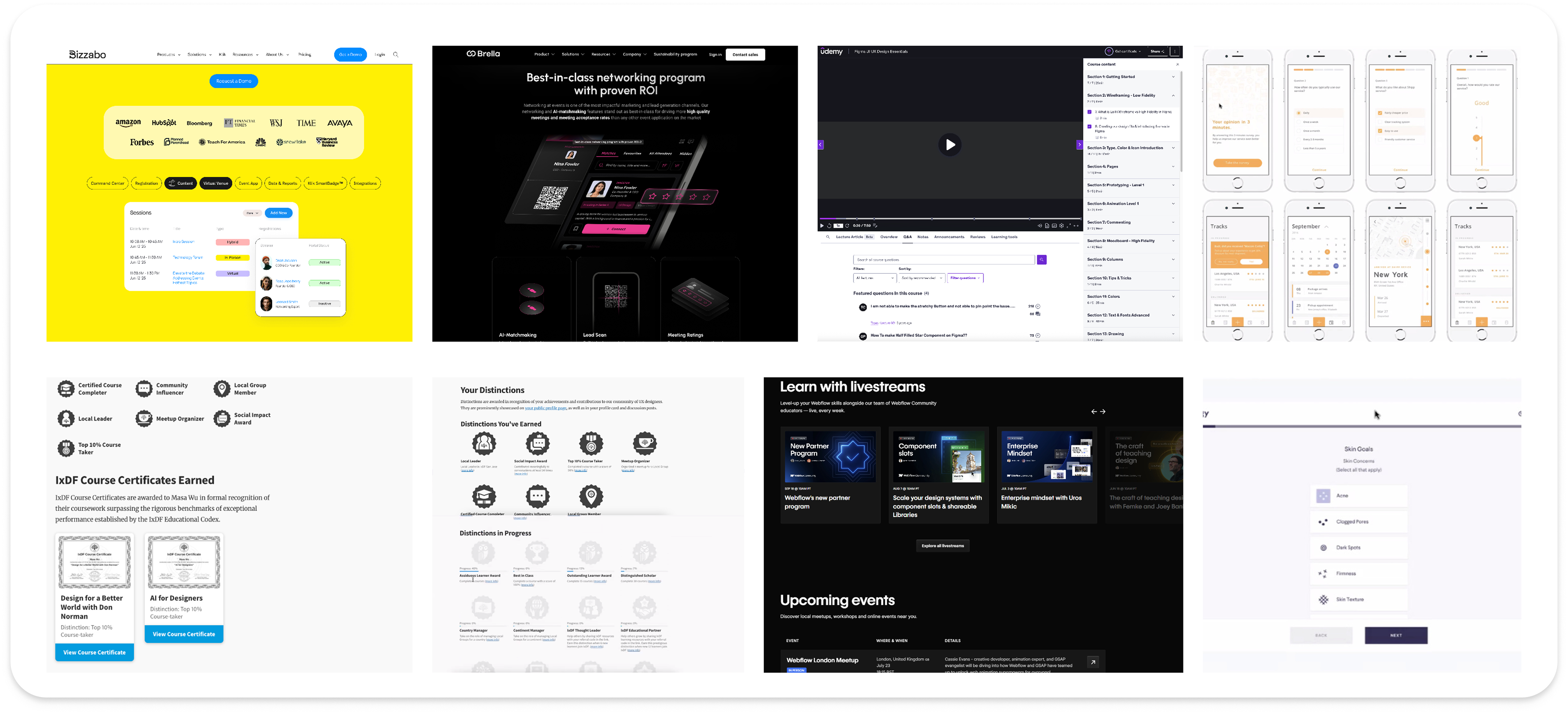
We then sketched out rough ideas, focusing on quantity and exploration over refined visuals for the moment.
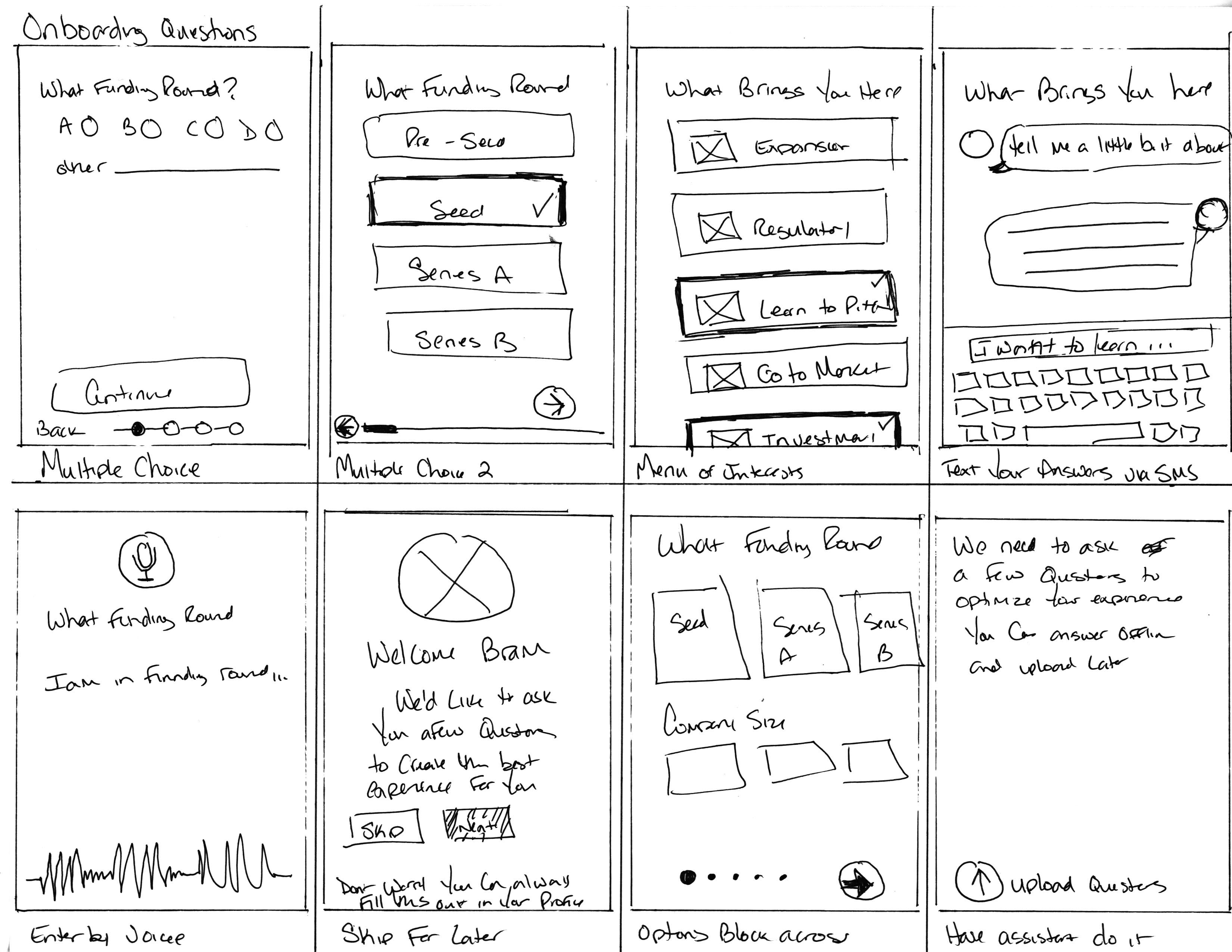
Sketches for User Onboarding
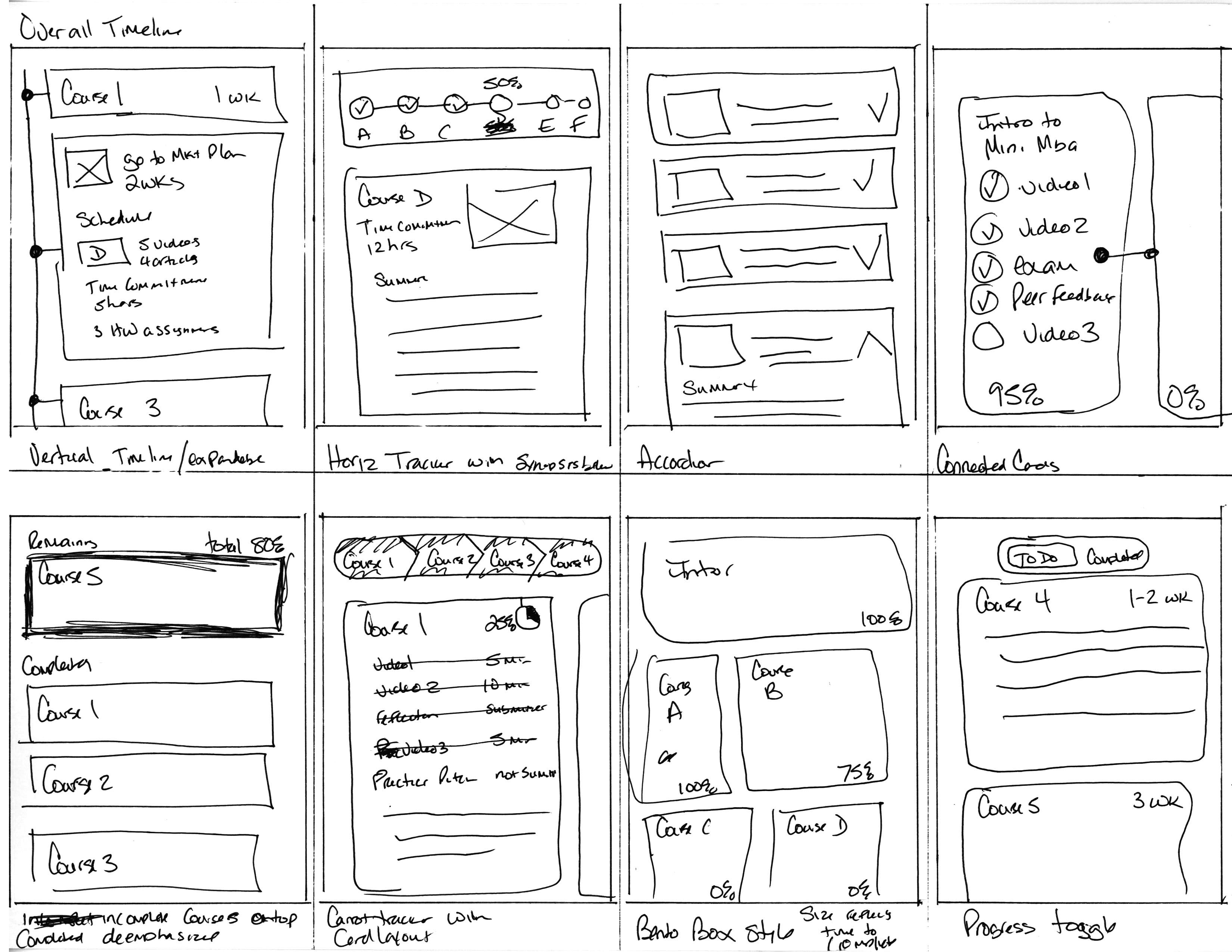
Example of sketches for Course Timeline
We then created Lo-Fi screens based on our top sketches and ideas, creating fidelity that could be guerilla tested for quick feedback.
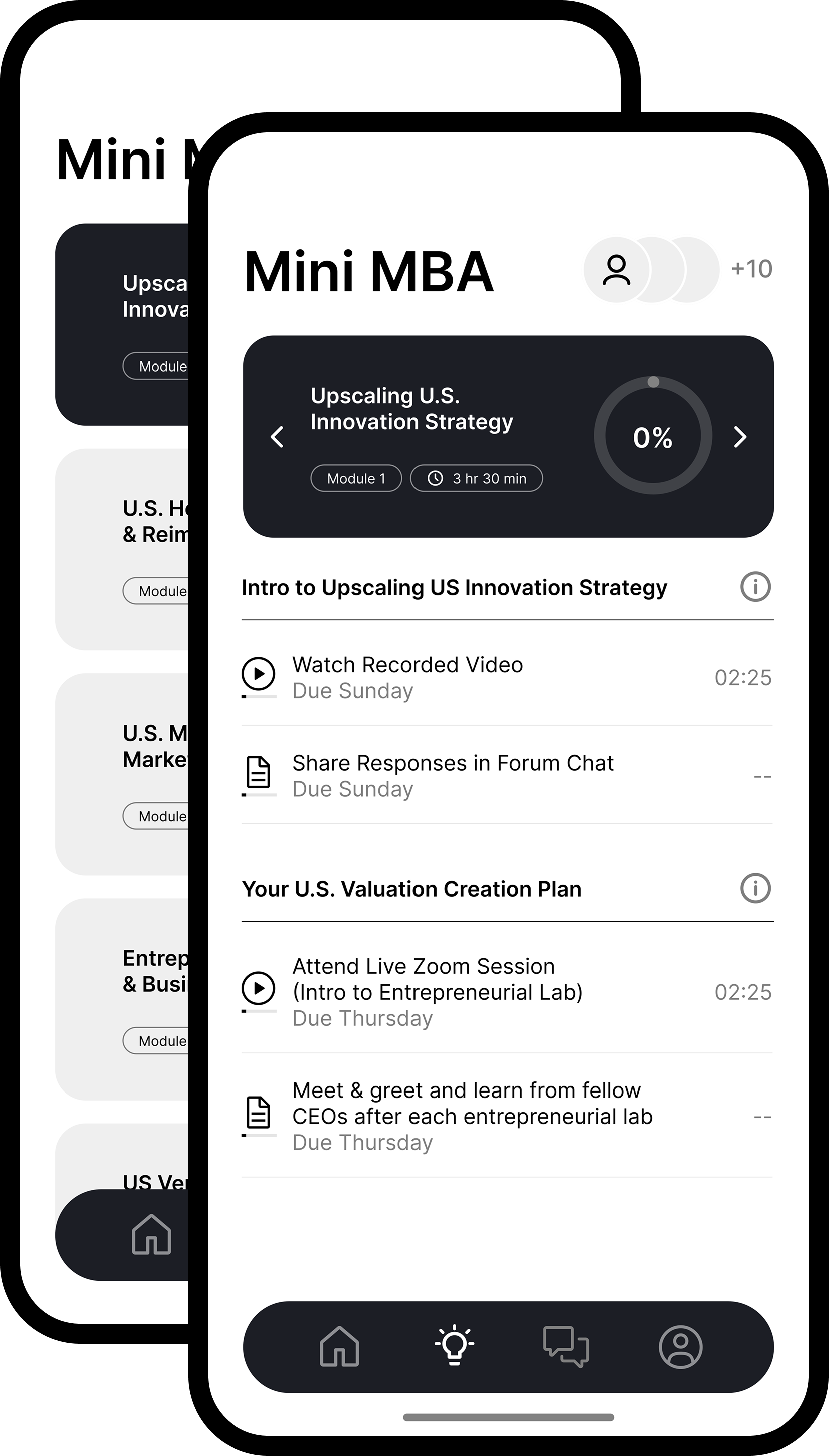
Lo-Fi Screens for Courses
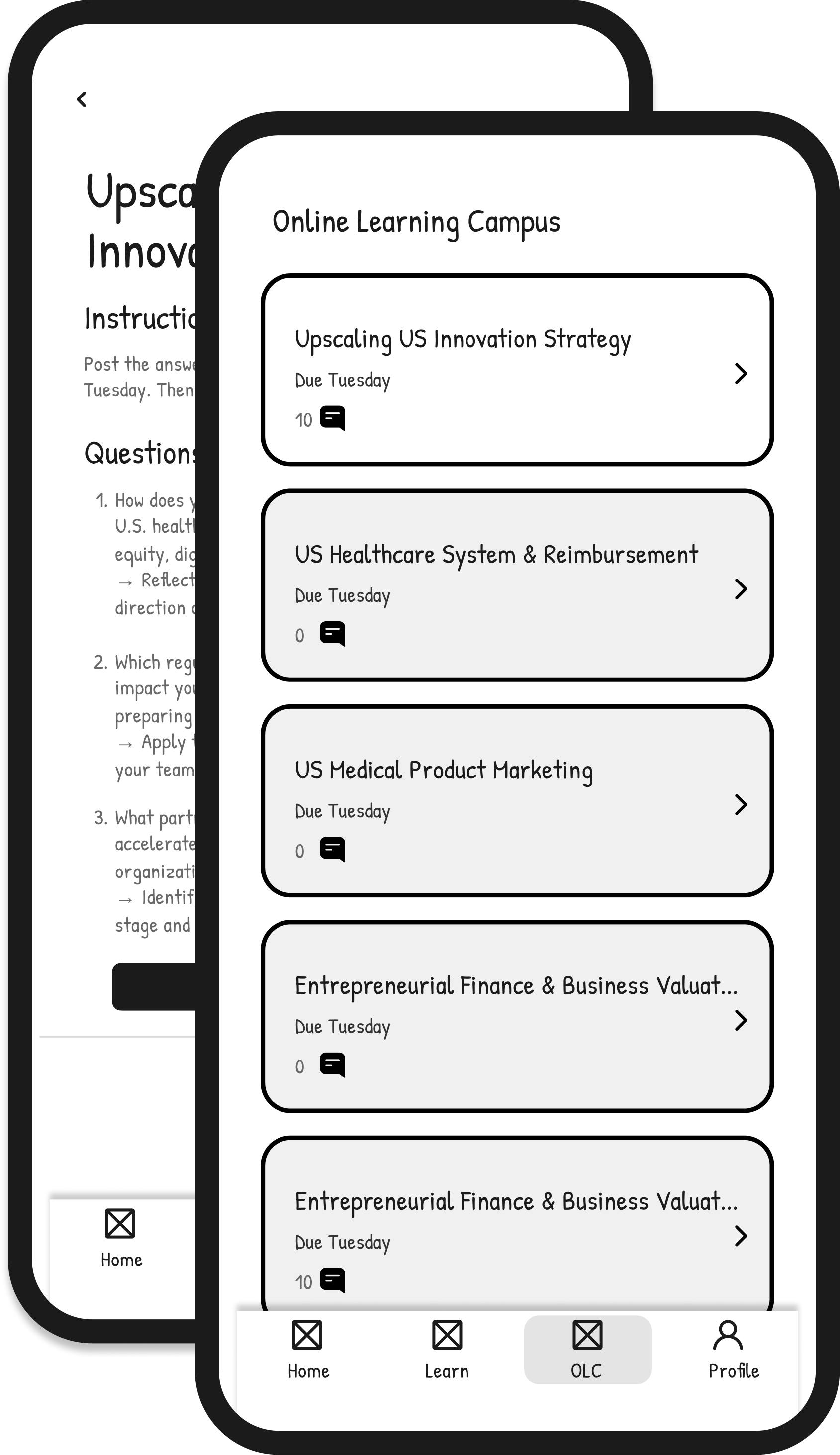
Lo-Fi Screens for Discussion Board
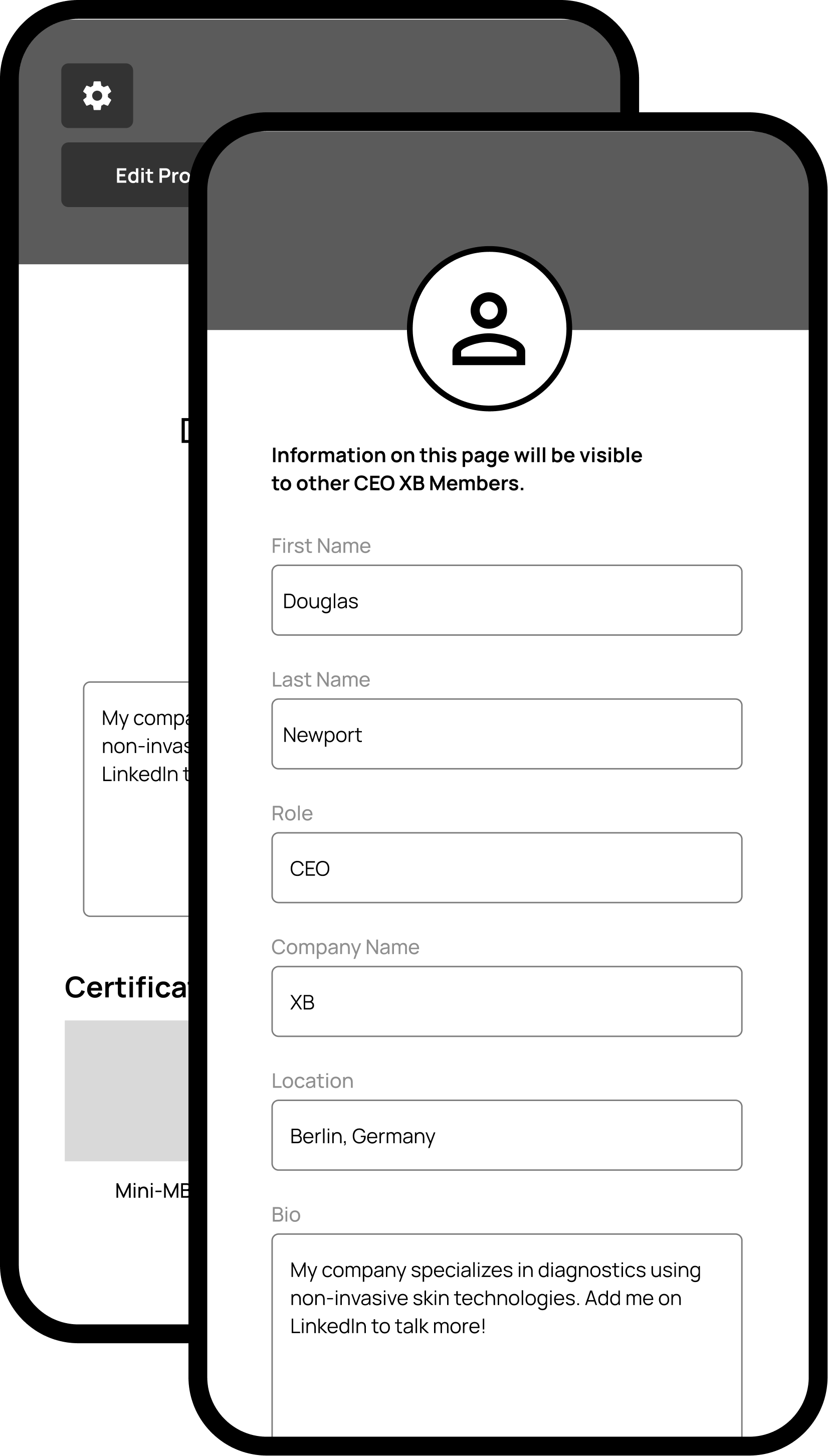
Lo-Fi Screens for User Profile
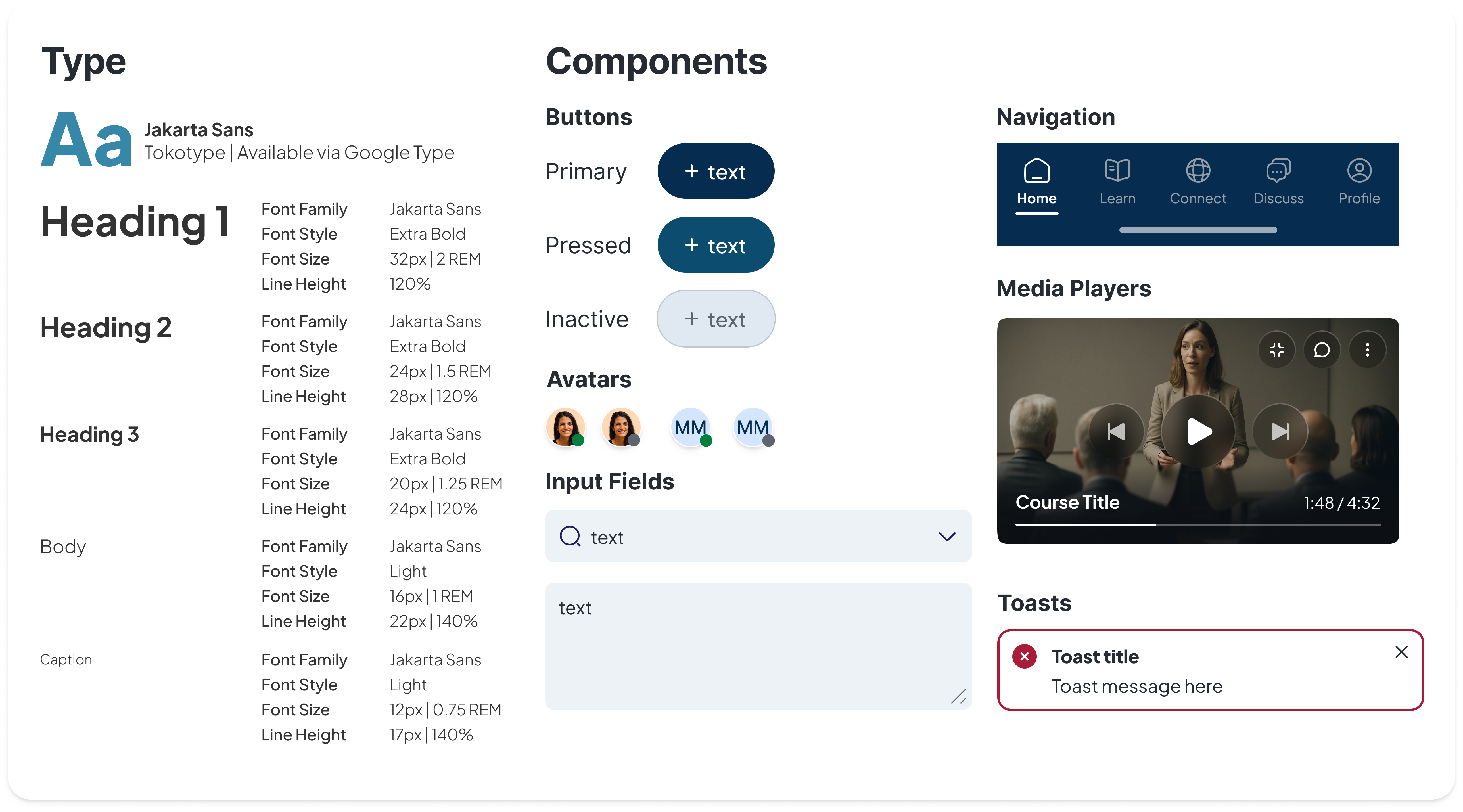
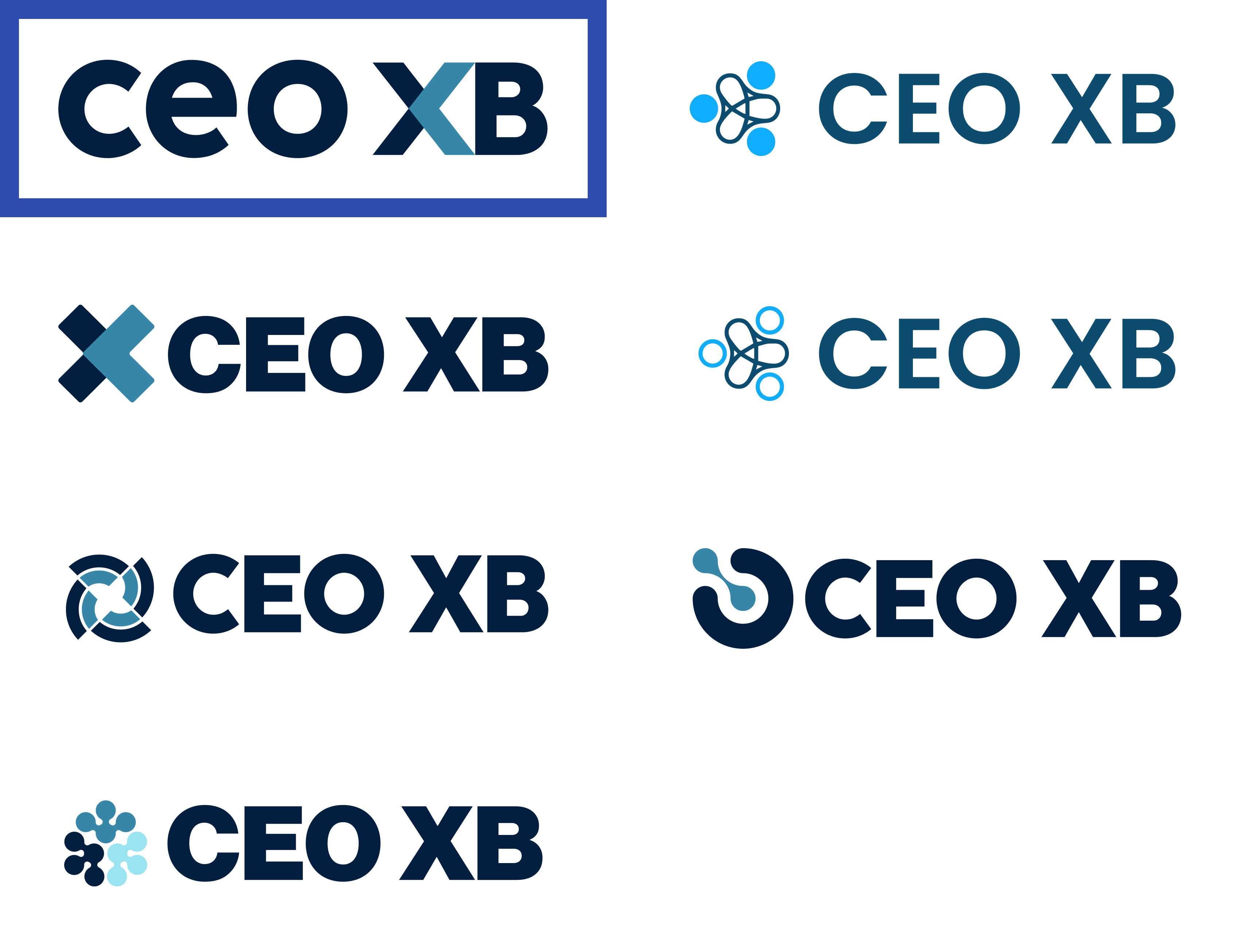
Creating a 0 to 1 product was more than just building screens, as we had to decide on additional design dimensions such as logo, branding, and an entire design system.
The combination of the Jakarta typeface, and deep, cool blue allow for a legible, professional, and welcoming feel for app interactions.
We ultimately voted on the logo in the blue outline, after conducting an internal team vote as well as client input. The logo was a great balance of simplicity, modernity, and boldness that captured CEO XB in a succinct and recognizable way.
Using our design system, our team built our first Hi-Fi prototype, focused on MVP features such as course modules, user profiles, and discussion boards.
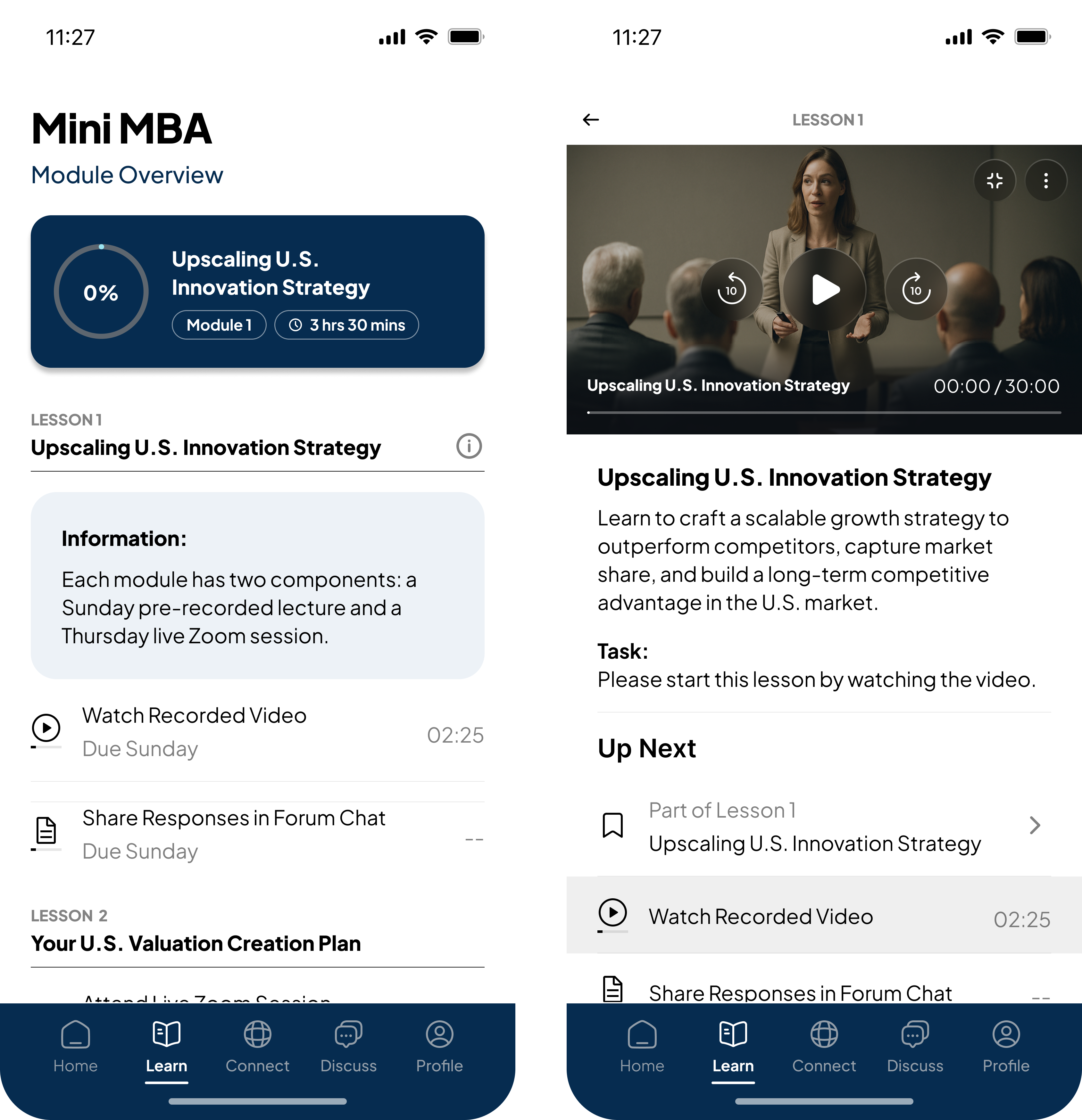
Courses Interface
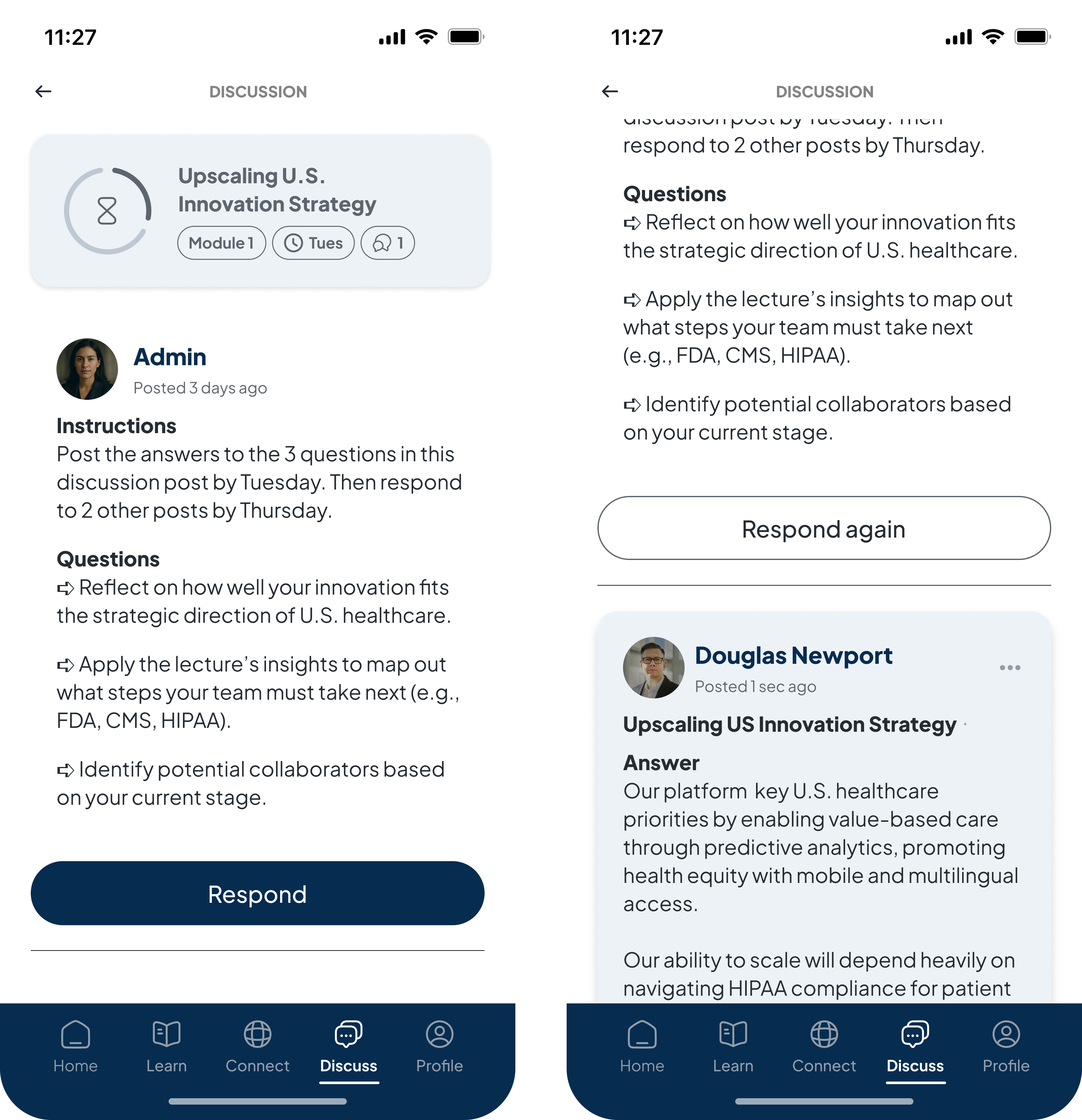
Discussion Interface
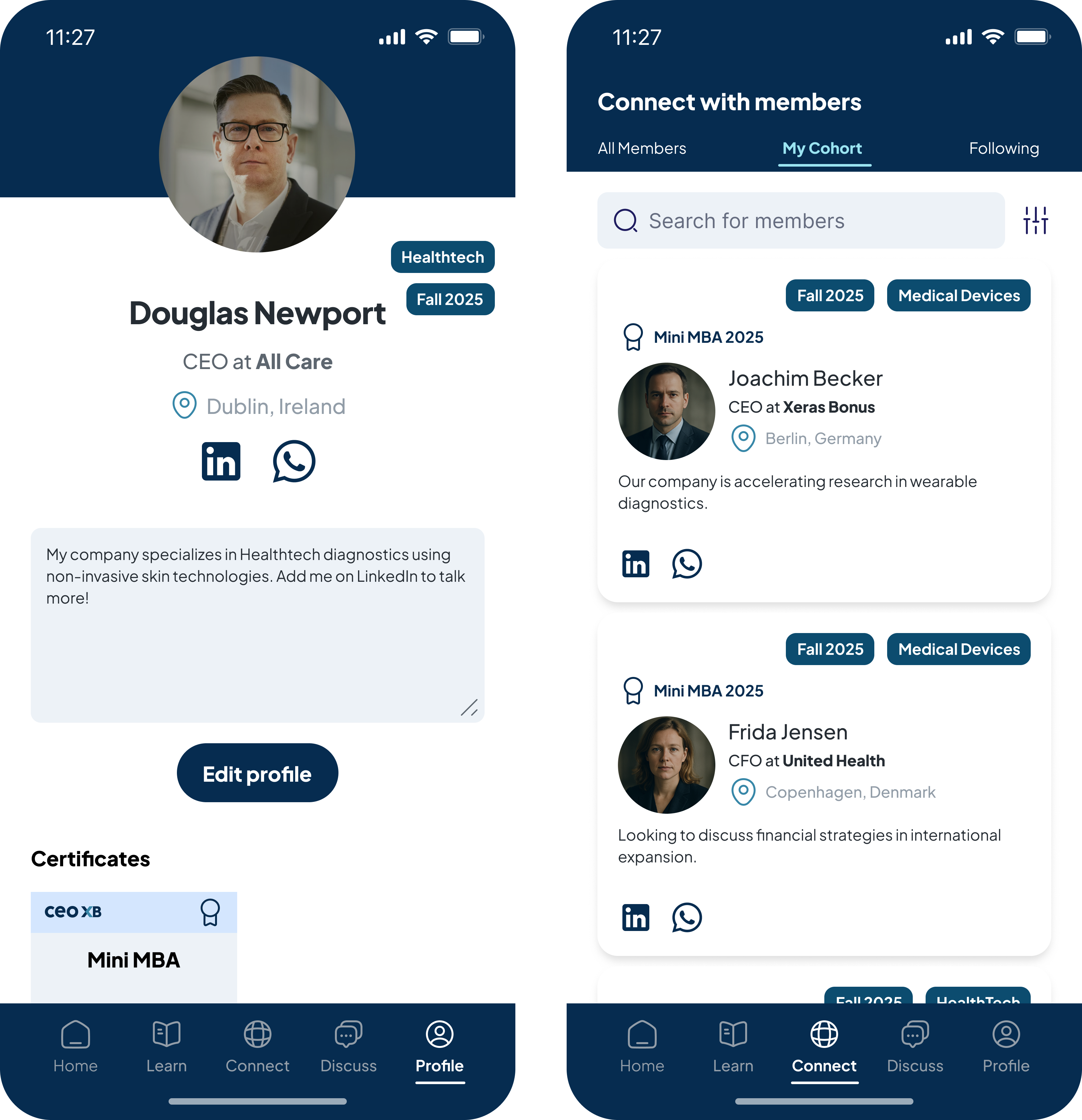
User Profile Interface
This prototype can be accessed here.
With a clickable prototype, we put our designs to the test through online testing platforms. We conducted both qualitative and quantitative test to have a blend of actionable data metrics and rich, detailed feedback.
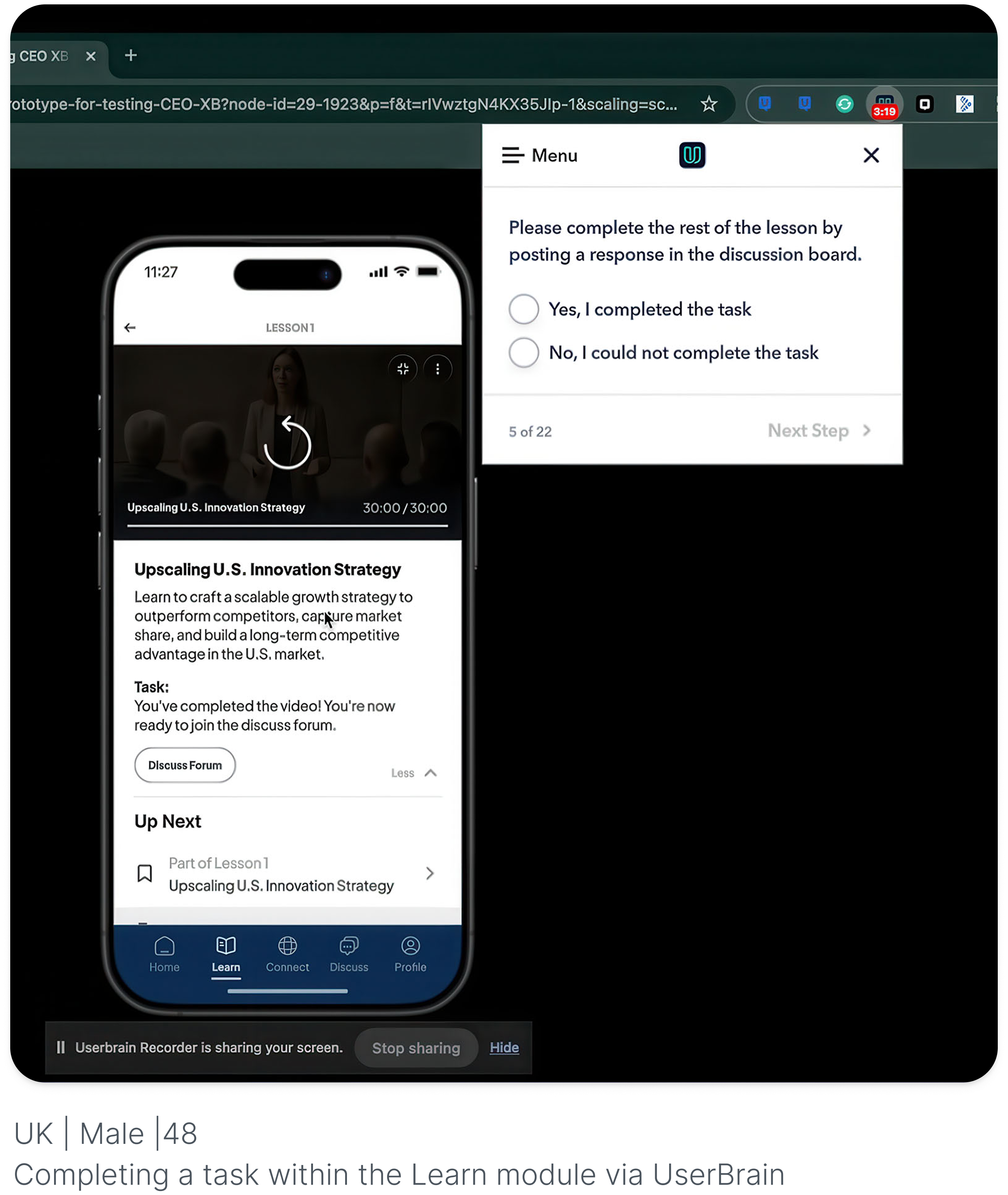
Test highlights:
-Confusion on when video is finished playing.
-Discussion prompt is on a different screen than input, causing inconvenience.
-We use a lot of terms to describe the learning section, should be streamlined.
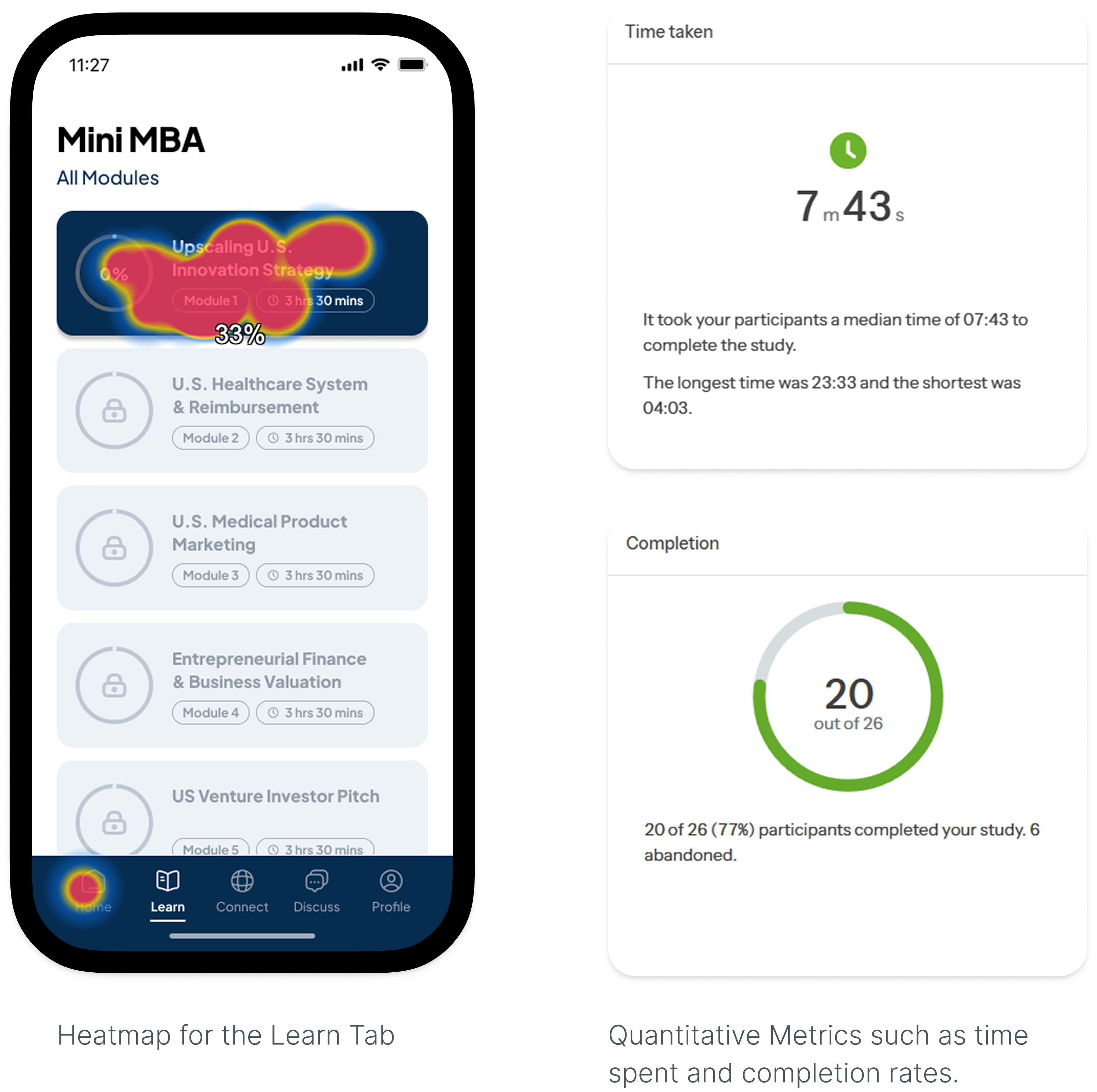
Test highlights:
-Heatmaps showed button presses around non-interactive areas. This may be due to users attempting to scroll.
-A 77% success rate and 7.43m task completion time showed early promise.
-The connect feature yielded high rates, with users competing tasks through different successful pathways.
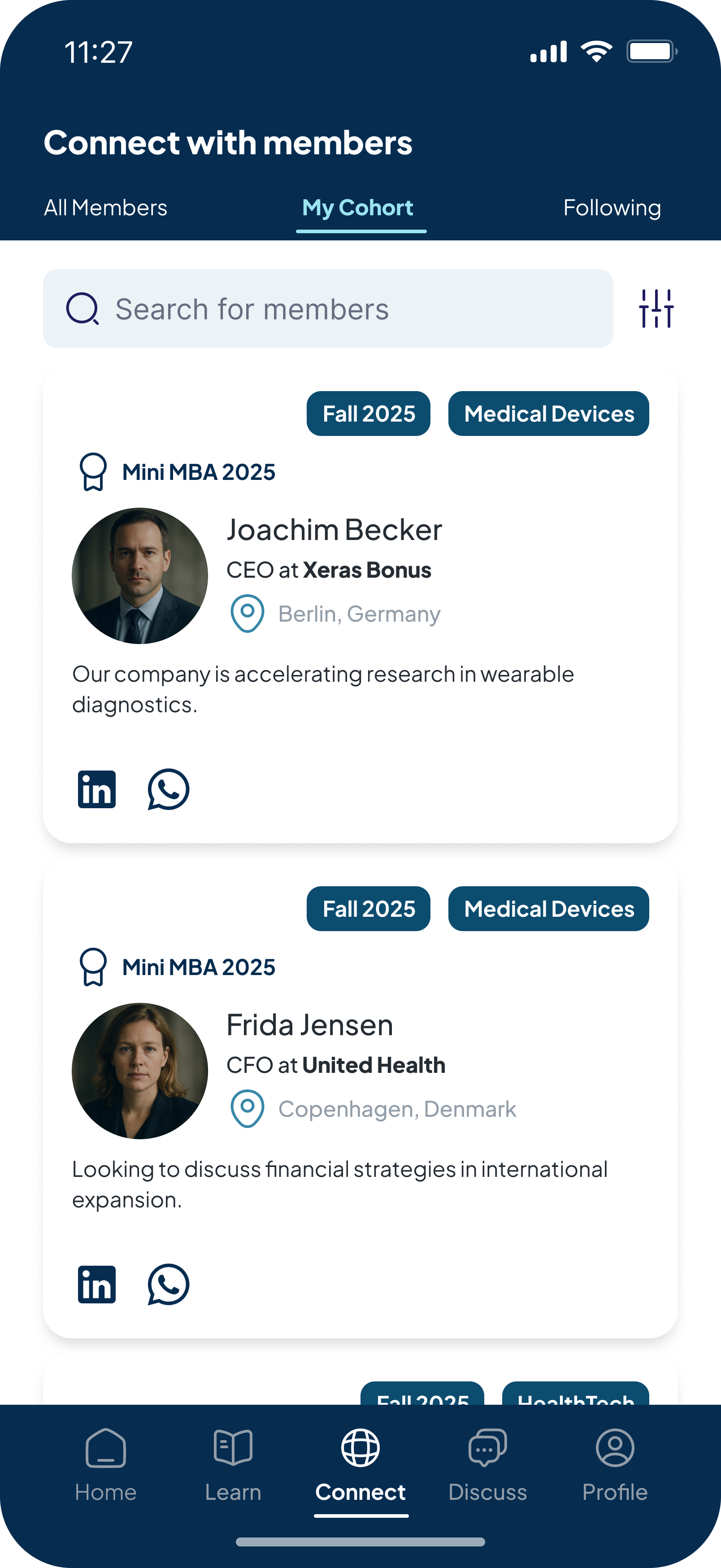
A new Connect Tab was added in response to business and client expectations, tying networking to a dedicated tab
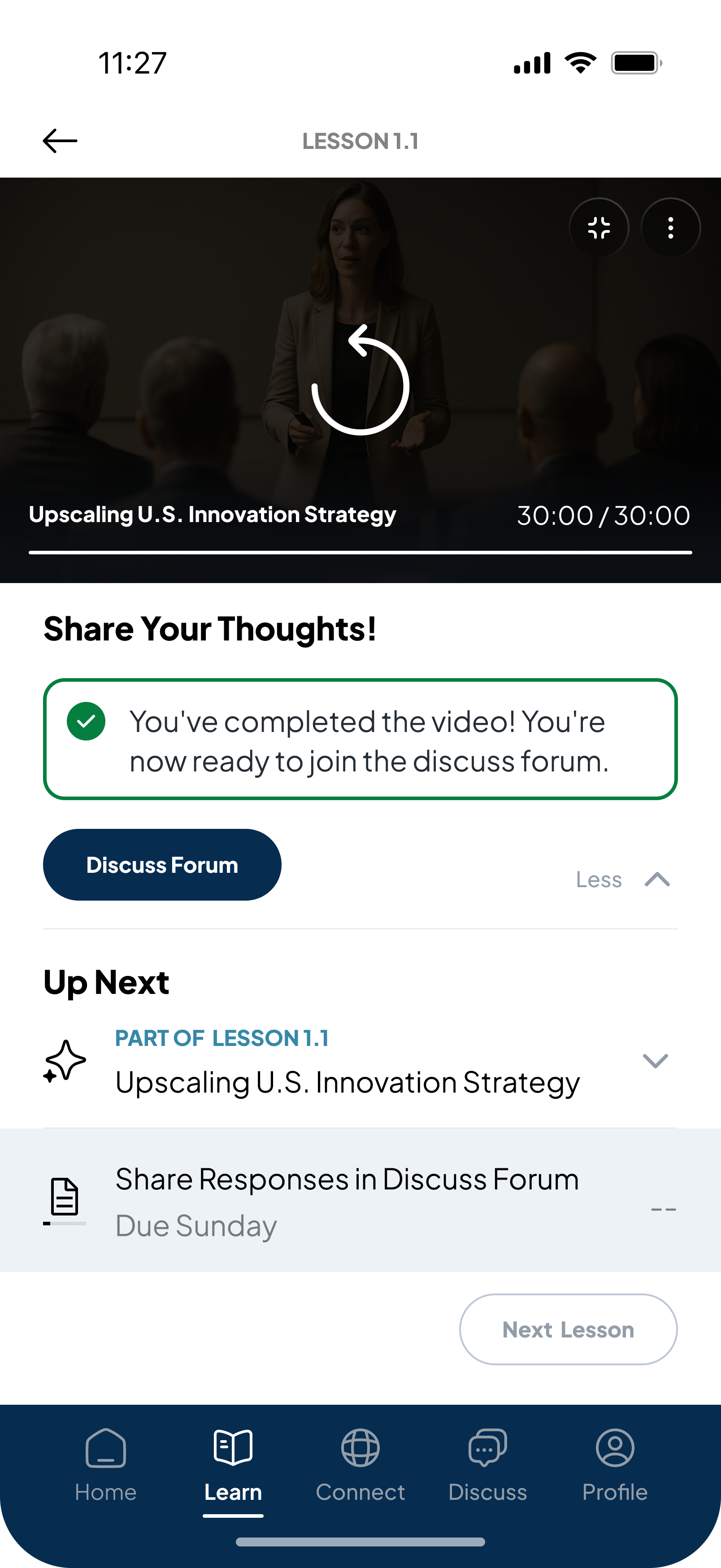
To address confusions regarding the video player, we added a status bar that communicates when users finish a video.
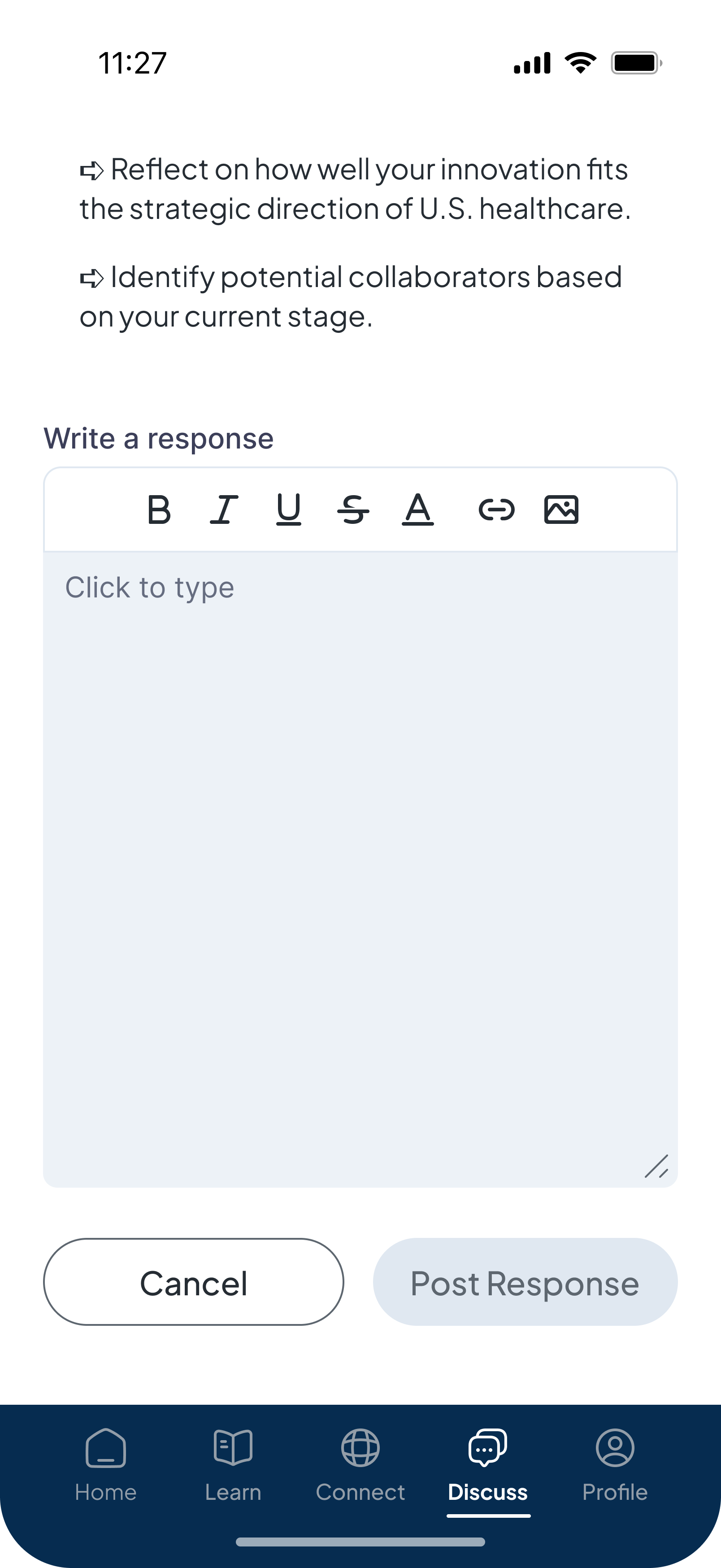
Finally, to address the frustration of switching tabs, we combined the discussion prompt and answer input field into one page.
Finally, our team conducted one final quantitative test on Optimal Workshop in order to verify our design updates.
Results showed that we improved our System Usability Scale by about 7%, validating that our implementations have improved usability.
Our clients were very satisfied with these outcomes, as we had brought their vision to life through thorough execution of the user-centered design process.
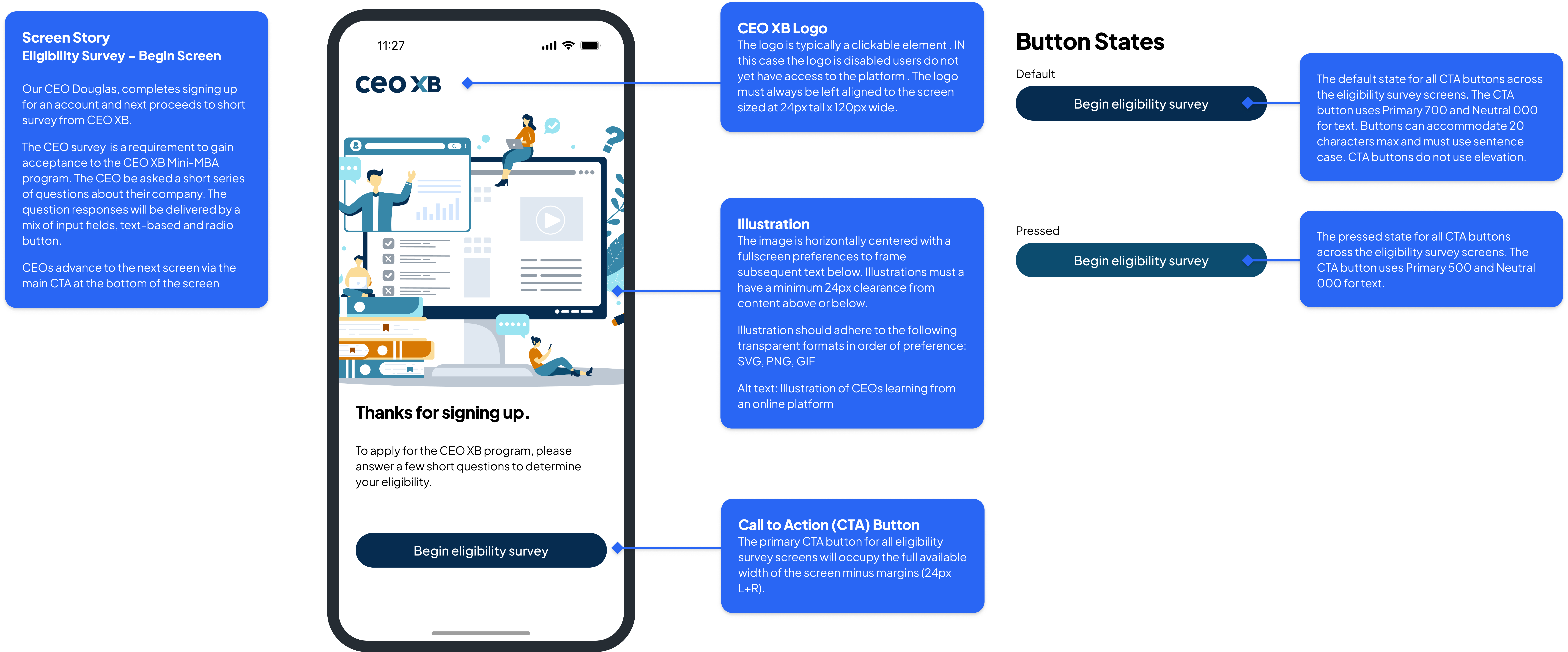
Following these tests, our team prepared a document detailing our designed screens and interactions, ensuring that the development team will have a clear understanding of our designs.
Client Handoff Document for Onboarding
Designing outside of the comfort of academia is a whole new beast, and it was nothing less than a challenge throughout these four months. Design was more than just making screens and clickable buttons, it was about navigating the complex ecosystem of user, business, and client needs, all with a restricted budget and timeframe. These were the months I grew the most as a designer and problem solver, and I'm excited to take these learnings with me as I continue to tackle future design problems.

Designed with care by Jason
